.

.
Showing posts with label animal rescue. Show all posts

Sunday, August 30, 2020

PLEASE: Don’t take Premarin!

Warning: some of you may not want to read this article. I understand, I get it. Seeing the true of something is sometimes quite ugly. When it comes to imparting knowledge with conviction, I believe a jerk with a message is never heard. And so, here, I am going to try and not get preachy about Premarin. I will work on not being a jerk while at the same time giving you information you might not know about.

When it comes to taking drugs, perhaps it’s easy to turn a blind eye as to where they came from. I think Premarin is exactly one of those instances. For obvious reasons, how the hormones for this drug are extracted are not well publicized—at least not by the drug companies. But if you go online there are copious amounts of information and accounts of the “extraction” process. Some websites are militant, which I think may turn some people off. But even so, they are simply giving the true account of how horses are used and abused in order to give women a hormone replacement that may not even be safe for them to take.

For those of you who don’t know, the hormone replaced Premarin stands for pregnant mares’ urine (PREgnant MARes’ urINe). These 4-leggeds subject to the drug companies are called “PMU” horses, sometimes called Premarin Horses. No matter what you call these female equines, their life is dismall at best and miserable and filled with cruelty for sure.

I can recall countless clients being surprised when I told them that taking the birth control pill makes the body think it’s pregnant. And when a woman takes Premarin, she may not really understand what the horses have to go through in order to extract their urine. And this drug contains hormones—for a horse—that a human woman takes to offset some of the symptoms of menopause. This just sounds crazy to me even if it didn’t involve animal cruelty as well.

The life of a PMU horse—24/7

Horses are nomadic, herd oriented, and prey animals. This means they travel (walk) for most of the day and stay in groups, not just because they are social animals but most importantly to keep predators away. The saying “safety in numbers” is what a herd is all about. The Premarin horses are kept tied up 24/7 while they are pregnant in order to extract the hormones used in this drug. Therefore they can’t roam around, satisfying their nomadic nature; and although they are near other female horses, they are constrained; and because they have no freedom of movement, their strong drive to be in a safe place away from any predators no doubt causes considerable stress on these magnificent beings.

If anyone reading this is currently taking Premarin or considering it from a doctor’s recommendation, perhaps with this (new?) knowledge on how massively inhumane it is to take horses from their natural habitat into this catastrophic environment you might choose another option for your hormone replacement therapy.

I personally take bioidentical hormones—still prescribed from a doctor—that are not from an animal source. There are countless studies showing the benefits of bioidenticals, but I don’t need to read anything—I know from how they make me feel. And not having hot flashes and dramatic high and low hormone swings is all I need to know they are working. I have tried many different roads to quelling my hormone issues (see Help for Hot Flashes! below), but bioidentical hormone replacement has been the best way for me.

My blood gets monitored and I have regular checkups with my hormone doctor just like someone would who is using Premarin. The difference is by taking bioidentical hormones—or even other hormones whose source is not animal—I am not negatively influencing the life of a precious horse, their offspring (who are usually sold at auction) or other living thing.

When asked by my clients about a trend or fad or newfangled treatment or even about possibly harmful ingredients in skin care products, I always say I choose my battles. I don’t get up in arms about every single possible negative in the world of skin care. With that in mind, you can say that the use of Premarin and the abuse of horses to extract it is one of my battles. It is an unnecessary drug taken by means that are cruel and unusual and because of that I cannot stand behind its use at all.

I’m not perfect—I do have leather belts and shoes and occasionally I’ll eat meat from a quadruped. But when it comes to animal cruelty of the sort this article is about, I have to take a stand. As many of you know, I love horses so this is a particularly close-to-home subject for me. In the end, each person will choose what they do in life. Hopefully for any of you that didn’t have the low-down on Premarin and its source now might consider a different drug to help with your hormonal symptoms.
  
For more information, see:

Tuesday, July 11, 2017

Quality of Life—my Quincy Blu

I wrote this piece for myself really, the day before I put my dog to sleep. I needed to speak the truth of his health, because to the outside world I think he looked pretty good. Perhaps it was my imagination, but when I announced to my dog park friends that I would be putting him down on such and such day, many of them gave me a look like—really? He seems fine. Why are you doing this? Like I said, maybe it was my imagination, but I got this feeling from many of the people I told. So the following is me justifying what I did, now 2 years later and upon reflection, realizing that perhaps I could have put him to sleep sooner. To end his pain a little earlier.


It’s been an interesting road, letting people know I am putting my dog down in a few days. It’s interesting how I am reacting to their reactions. If I was in complete knowing—unshakably so—that I was “doing the right thing” and even tougher at the “right” time, I wouldn’t let what other people may be thinking get into my head. And are they even thinking anything?

My dog, on the outside—when outside—seems to be old, slow, and still mobile. He still sniffs around, digs for slugs in the grass, and even trots around and rolls on the grass most days. To the outside world, he may look like he has a pretty good quality of life. But, alas, his quality of life is severely diminished and steadily going down hill every day. I have this information because I am with this sweet being just about 24/7, 365. I know him and he knows me. I know his quirks and foibles, his silliness and his state of health.

I have been to the vet’s office time after time over the years, and especially a lot lately. I know the injuries he’s had, the medications he is or has been on. I know how he feels if even only a little bit. I know this dog better than anyone else in the entire world—better than everyone. And I know this dog is better off going to sleep forever starting tomorrow afternoon vs. living the life his is currently living. As for the quality of his life now, here is what I know:
  • He can’t drink enough water to satisfy his kidneys. (He was diagnosed with kidney failure—exactly one month ago.)
  • Therefore he has to pee a lot more and a lot more frequently than ever before.
  • Peeing involves going down then up about 15 stairs; something that has never been easy for him and now is super difficult. Sometimes resulting in him falling down backwards as he is making his way up. (Tonight he fell on his way down...)
  • Speaking of falling down, I can’t count the number of face-plants he has experienced just in the past week. They are becoming more and more frequent as the days roll by.
  • Up until recently I couldn’t get him to eat very much. He stopped eating his kibble a month or more ago. Wet food—no. He won’t eat anything other than a grilled chicken breast and mini Milano cookies and some dog cookies.
  • I have been giving him subcutaneous fluids daily for the past several weeks. Trying to keep his kidneys happy and his system detoxified.
  • Recently, when I go to put the needle in to administer the sub-Qs, he looks at me as if to say, “Please don’t poke me!” Today, since he will be going “home” tomorrow, I will not poke him.
  • He can no longer get up on his couch. I put a dog bed next to it in the living room.
  • He can no longer jump in the bottom part of the car. I lift his front legs in first, then his back. And usually he can make it up onto the seat, although not gracefully and sadly not all the time. Falling for him has become a daily occurrence.
  • He sleeps a lot now. More than ever before. And it is deep, deep sleep. The kind where the skin over his eyes shows and he can’t hear me when I move or get up.
  • His hearing has been waning for months—if not a full year now.
  • His eyesight has never been very good at night and now if I’m too far away he can’t see me and gets a bit frantic.
  • He seems like he is losing control of his limbs. He mostly walks like he’s tipsy and sometimes like he’s drunk.
  • The mornings are pretty good, for the first few minutes anyway. By the end of the day it’s just sleeping and sleeping and that deep deep sleeping.
  • When I come over to him he makes noises almost like snoring, but he’s fully awake. I sometimes think he is talking to me. Telling me, hey—it’s time to let me go. I’ll still be with you—always.
  • The diarrhea has almost stopped; it went on for weeks and weeks. Emergency runs out the door, and diarrhea-ing everywhere he needed to.
  • The throwing up has all but stopped. Altho every now and then I’ll find one.
  • He now has two peri-anal fistulas—open sores that are painful and ooze puss every day. He licks at them incessantly, poor guy. I do what I can to clean and attend to them and have for many months. 
I don’t know. Is his quality of life great? No. Is it poor. I would say it is no where near optimal and getting worse every day. He is ready. I am ready to let him go. He, I have no doubt, is ready to go. To sleep, pain-free, till the end of time.

For more articles on this sweet pup, see:

Thursday, September 1, 2016

My Sweet Cat Grace—what I miss so far

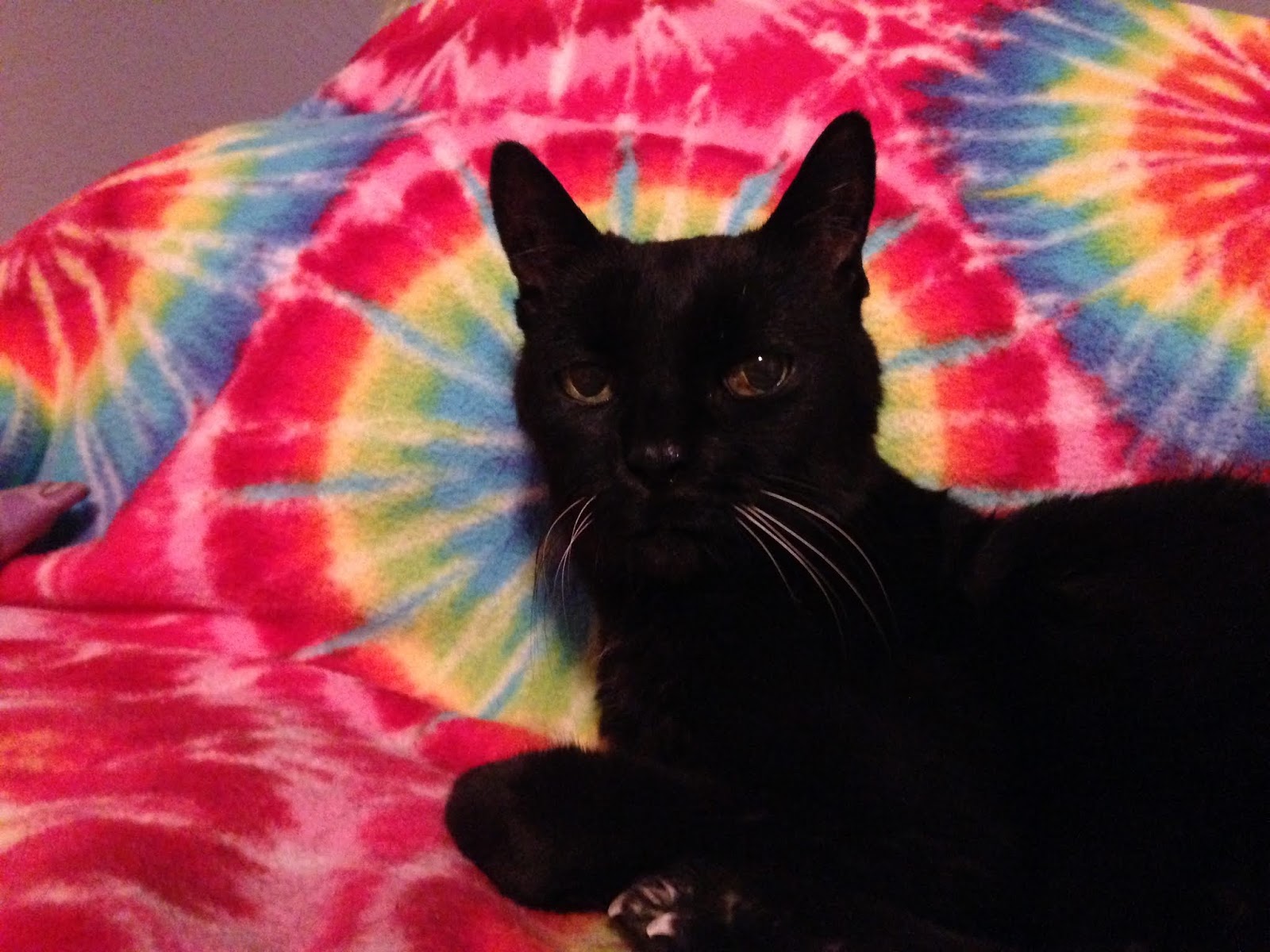
My little (petite) 22 year old kitty, Grace, passed away in May. She has been the only cat (present 2 included) who drank milk. I put goat’s milk in my coffee every morning and I always gave her some, too. Toward the end, many times a day.

Grace stopped eating much dry food so I also have tons of wet food for this picky eater. Now, day one without her, I opened a small can this morning and now this evening, half is still there. With Grace, I might have gone through 2 or 3 different cans trying to get her to eat something she liked. Jax & Jez will basically eat anything, so they would always eat what Grace didn’t want.

I like not having a food station in my bedroom. I eventually put G’s food on the nightstand on the side of the bed where she sleeps. Water, a small amount of dry food in case she got hungry in the middle of the night, and wet food or milk.

Tonight, night one with her out of the house, I have “heard” her cry and heard her walking around several times today. I’ve habitually gone to look in on her only to realize half way to the bedroom that she’s no longer there. Still, I’d go lay where she used to lay and shed a few tears and give thanks to her for everything she gave me, for every little thing she was.

I usually write (on my laptop) on my couch in the living room. Several times a day—a dozen if I’m home most of the day writing—she would come in and look for me to go feed her. But sometimes she would come in, I’d give her food, but what she really wanted was love and attention.

During the last 6 months or so of her sweet life I started giving her what I called Love Sessions. Periodically throughout the day I’d stop what I was doing and go in and give her love and pets and rubs and attention. I did this knowing she wouldn’t be around forever and I wanted to be sure I loved on her as much as time allowed. In hidesight I’m glad I had the inspiration to do this because now, with her gone, I don’t feel I left anything on the table. I played all the cards and gave her everything I could up until the very end. I don’t have any regrets; no would-a, should-a, could-a’s; no feeling bad about skipping something or not giving her tons of love and affection. When she was younger, I couldn’t give her love—she wouldn’t have it. But over these last few years, to my delight, she became more and more receptive to the magic power of love.

Apparently I was taking care of her more than I even realized. When I walk through my front door, my first instinct is to put down whatever is in my hands and go check on her in the bedroom. Same when I’m in the bathroom. I had a bird’s eye view of her if I cracked the adjoining door open. I would always see her ears sticking up even though she was usually sleeping. Or I would see her standing up looking at the door to the bedroom, waiting for me to come tend to her.

It’s so interesting to me how simple life has become since Grace—and Quincy, too—has passed. Each in their own way had multiple issues that required specific care. And now, with them both gone, I am starting to realize how much time and attention they required. And I miss giving all that time and attention to them—multiplied.

For more articles on the amazing and long life of kitty Grace, see:

Wednesday, May 25, 2016

Amazing Grace—Such a long, long run

My sweet kitty Grace’s long LONG run has come to an end. After watching her fairly stable (but old) condition decline last week and especially over the weekend, I had her put to sleep in our home on Monday—a decision I believe was perfect timing.  

Gracie and I met in Dallas almost 22 years ago, on or around August 1st, 1994; she was given to me by a friend who found her in unusual circumstances. She has been a constant companion, a pain in the butt sometimes, but always and forever a sweet little girl, delicate from day one until the day she passed into the beyond. She truly embodied her name.

Gracie started out as a foundling in Dallas TX, then she became a Chicagoland cat, and finally a Colorado kitty. She saw the kitten I got for her 1st birthday (Archer) pass away at 16 ½. She recently went through Quincy, my dog, transitioning. And now her time has come to pass into pure spirit, pure love.

Grace, unlike Archer and Quincy, was never sick a day in her life. She was easy that way. She was, however, a very picky eater—until the very end. Sometimes there could be as many as 5 food bowls lined up on the kitchen floor and me hoping one of them would be adequate enough for Grace to eat. Such a picky eater!!! (Admittedly, I gave in to her more as she got older. I revered her age, which made me much more susceptible to her picky ways.) Toward the end I would bring the food to her, but still if it didn’t suit her, she would turn up her nose.

See what I mean...
She had a tremendous “voice.” Burmese, like Siamese, can come with loud cat cries and Gracie sure had one all her own. It kept me up or woke me up for years, but the last year or so of her life, she didn’t have the loud cry. I guess old age has its advantages.

After moving to Boulder, I adopted Quincy Blu, an Australian Cattle Dog, who was kind and sweet; he passed away last summer. Although Grace lived with him for over 7 years, what seemed like each and every time she saw him she acted (and reacted) like she had never seen him before, looking incredulously at this giant beast who had walked into her space or who she was passing by. That always made me chuckle.

Grace was a true cat. She preferred to hang out alone usually and sleep in secluded areas. Just before Quincy passed last July, she started to sleep and live exclusively on my bed. I thought when the habit started that perhaps it was her way of being closer to me toward the end. I think I will continue to think that, no matter if it’s true or not.


After 22 years together, I called this sweet girl by many names, some of these included: Grace, Gracie, Grainy, Gracilla, Princess Grace, Amazing Grace, Sweetie, Puddin, Pumpkin, Lovey, Sweetness, Silly Girl, Macy, Macy-Macy-My Gracie, Mookie, Mocha Chocolata, Brown Girl (she’s espresso—Burmese—but looks black), Little Girl, Sweetness of Life, Sweet Thing. More recently I was calling her Skittles. (She lost some function/stability of her back legs—so she kind of side-winded and skittled about.)

Although I mentioned I think her passing was at the right time, I didn’t think that at first. Like so many pet guardians, I struggled with the thought that perhaps I was putting her down too soon. I felt this with Quincy Blu as well. But like Quincy, once the day was dawning for the vet to come over, it was abundantly clear that indeed I was not too early, in fact I was hoping I was not taking these steps too late.

When all is said and done, I truly believe that her passing came at the perfect time—for her. She felt ready, she seemed in some discomfort, and I feel blessed that I could have my wonderful vet come to the house (like he has done twice before) and euthanize my sweet 22 year old in the peace and comfort of her home and in her “place.” The special place that was all her own where she slept and ate and finally took her last breath.

Thank you Grace for these 22 years. You came to me (thank you, Teel) unexpectedly and gave me unimaginable years of joy and love. I love you, Sweet Girl. Macy, Macy, My Gracie—rest, in peace.

For more animal-related articles, see:


comments:

  1. Ponie Lunsford May 25, 2016 at 2:11 PM
    A very lovely tribute to Grace. The Pictures are wonderful! Sweet Gracie - Peaceful transition! xox

  2. yazalady June 1, 2016 at 8:42 AM
    Such a deeply touching and moving tribute to Gracie.
    Thank you for sharing this very intimate experience with us.

Thursday, February 18, 2016

Evening Primrose Oil Q & A

You may already know how important it is to get essential fatty acids (EFAs) in your daily diet. Evening primrose oil is one way to get these essential nutrients. I recommend it for clients who have PMS, oily skin, breakouts, and dermatitises like eczema. It even works as a hangover cure. (Note: although there is some discussion about monthly cycles for women, men, too, can benefit from taking this supplement. In other words, don’t let the talk of periods turn you off from reading this article!)

I started using evening primrose oil capsules and have noticed a great change not only in my skin, but a lessening of symptoms of PMS. I used to get cysts on my jaw and neck area, which I know were hormonal, and since the evening primrose I now only get one small pimple every 3 or 4 months around my period.

Evening primrose oil is not for everyone, but I have seen it work really well for a lot of people. I include that email because it mirrors the experience of many of my clients.

Evening primrose oil can help with the balance of estrogen in the body during menstruation (when estrogen levels naturally lower). It can help to elevate estrogen levels and in some cases eliminate the pain and tension of a woman’s period. I used to take it when I was ovulating, to help lessen the sometimes erratic emotional and physical changes during PMS. Then, by the time my period started, I was feeling more in balance and experienced less pain from cramping.

In your book [Timeless Skin] you recommend evening primrose in capsules for oily or acne skin. I was wondering what milligrams are you talking about per capsule?

I usually get my primrose oil at Whole Foods. I use the 365 brand that are 500mg each. They look like vitamin E capsules, or perhaps a bit bigger. Years ago, evening primrose was a little hard to find. Now there are many brands to choose from. I don’t recommend one brand over another, but I do suggest talking with the people working in the herb department at your local health food store. Ask them which primrose oil would be the best one.

I started taking evening primrose oil, but I’m not sure if it’s really helping my skin. I’ve been taking it for 3 months now. Should I continue, or should I stop taking it?

The thing with evening primrose oil is you may or may not notice a big change. Some people do; they notice a lessening of the oil in general in their skin, or they may even notice their breakouts have diminished—if not in frequency, then in size and number. The essential fatty acids found in evening primrose oil are essential to healthy cells, yet they are hard to get through food. So for me this is reason enough to take evening primrose oil regardless of noticing big results.

When and how many evening primrose capsules do I take? Since it helps PMS, do I only take it during menstruation or should I take it daily?

I recommend experimenting to find out what works for you—especially if you are taking evening primrose oil to offset symptoms of PMS. For problem skin, try 2-4 capsules twice daily and increase if you don’t see any noticeable results. For cramps due to PMS, try 1-2 capsules twice a day from the time you start ovulating, then increase by one or two capsules (3-4 twice daily) until you have finished your monthly cycle. I used to take more on the days I felt the emotional roller coaster that premenstruation can bring.

I have been using evening primrose oil to help with my acne and hormones, and it’s been fabulous. I now want to become pregnant and wonder if I should continue or stop the primrose oil?

I was advised by a doctor that evening primrose oil should be very good to take during pregnancy. He suggested the baby will like it and utilize its nutrients, and fish oils, too (if you take those), to build healthy cell walls. Evening primrose oil should be very good for a growing fetus. Conversely, evening primrose may not be advisable to take if you have or have had cancer because it may help those cells to grow. Please consult with your doctor before taking this or any other supplement.

Evening primrose oil may be contraindicated if you are taking **Premarin® (a common medication taken for hormone replacement therapy after menopause). Because evening primrose oil can help promote the production of natural estrogen, coupling it with the estrogen in Premarin may result in an excess of this hormone. Whether or not you are taking hormones or any other medication, check with your health care practitioner to find out if you should or can take evening primrose oil.

Last night I was having a drink with some coworkers and the topic of evening primrose for hangovers came up. Anyone who has tried it now swears by it. Thanks again for that information!

**As an advocate for animals, please know that Premarin (aka Pregnant mare urine) utilizes horse urine in a way that is inhumane. Don’t believe me? Click here, or simply do an Internet search. There are many articles describing the truth about horse urine collection and the deplorable life of a PMU horse. There are also many alternatives to this unfortunately popular hormone medication. My own article will be coming soon.

For more information, see:
Ella, a former (now rescued) PMU mare.

Saturday, February 6, 2016

Colorado Horse Rescue on Fox31 News

Fox31 News came to Colorado Horse Rescue, where I volunteer, last Saturday to do a segment on the rescue. They happened to be there during my shift that day. I was one of the volunteers they miked up and interviewed although, as these things go, none of that made it into the piece. No biggie—I’ve been on many TV shows for my books in the past, and this segment was all about the horses anyway. Still, I am in the video, which is fun. I hope you will CLICK HERE to be taken to the video. Below is the article that accompanied the video on Fox’s website.


LONGMONT, Colo. --  Fifty-five horses call Colorado Horse Rescue home. That’s near capacity with room for only five more. “We are here to rescue, rehab and find forever homes. It’s similar to a human society for horses,” Carol Brice said. But these animals are different than cats and dogs. They’re expensive to feed and to care for, and their lifespan can stretch 30 years.

“Many don’t know there’s a crisis in America,” Brice said. “There are 170,000 unwanted horses in the U.S. About 6,000 in Colorado alone.” One horse, Lil Bit, came to Colorado Horse Rescue unwanted and neglected, much like a quarter of the horses that have come through. The other 75 percent are relinquished by families who can no longer care for them.

“What we see is a horse gets ill or injured, too old to ride, and they get discarded. That’s unfortunate,” Brice said. “They should be honored and cared for.” That’s what the volunteers at Colorado Horse Rescue strive to do each day. And in the process they get attached. “I have learned not to fall in love because they get adopted out, which is great, that’s the whole point,” Brice said. [I actually said that, but whatever!]
This is Kyle, a beautiful Arabian bay and the first horse I fell in love with at CHR. He was adopted 2 years ago, but I still pine for him!
But it can mean heartbreak, especially knowing they can only help so many of the animals. Their hearts can be bigger than their wallets so they’re counting on the public to take a horse home. “All kinds of horses wind up in this situation through no fault of their own,” Brice said. “We have all breeds, ages, sizes all ranged in training, come out and take a look.”

It costs $500,000 a year to keep the operation, which is in its 30th year, running. Colorado Horse Rescue is working to open a second facility where older horses can come to retire. Donations are being accepted to help make that dream a reality.


Thanks, Fox News. Any and all publicity for the safety and care of these special animals is always appreciated!

Sunday, January 17, 2016

Doglessness has its moments

I was prompted to write this piece as I walked across my kitchen floor barefoot, something I don’t do very often in the winter; I usually have socks or down booties on. The floor felt a little sticky, which I thought was odd and it’s what took my mind to my love, Quincy Blu, and how he probably spent a lot of time cleaning the floor when I was away from home. He wasn’t allowed in the kitchen, but as we all know, when we’re out of the house, all bets are off!

I’ve learned a lot since my pup’s passing last summer. Like a friend of mine once told me, you won’t believe how often your cats throw up until your dog is no longer “taking care of things” while you’re gone. This, I have found, is all too true. It seems my cats do throw up a lot, although they are all healthy and well. It’s just that there is no longer my 4-legged scavenger (aka Quincy) to—gross as it might be to us humans—lap it all up without my ever knowing. Yum yum.

I’ve learned that, although of course I’d rather be out with my sweet Quincy Blu, I do enjoy not having to take a dog out immediately after waking up in the morning. I like having my coffee and waking up that way vs. waking up outside.

This is my first winter without a dog since moving to Colorado. Actually, I was here for one winter that first year, but I was so in love with being outside it was pure heaven even without a dog. Now I find I’m not too sure what the weather is like—what the temperature is—when I get outside. Since I live in a condo and had to take Q out several times a day to walk and do his business, I always knew the weather and all the nuances that go with outside air. Nowadays, however, I like seeing the weather from inside my home and do not miss being out in the pouring rain, below zero temps, and gusty winds.

Q & me at the Bobolink trailhead, Open Space

I do miss the comradery I had with other dog adopters, especially at the park across the street from my home. Although I see some of them every now and then and can catch up, it really was another loss after Quincy’s passing—the loss of the social component that comes with walking a dog. The two go hand in hand; the passing of a beloved pet and missing the community of dog park friends.

I miss having a dog. Obviously I miss Quincy specifically, but I miss having a dog in my life in general. Admittedly, I do feel like kind of a “cat lady” now with 3 felines, the eldest, Grace, being almost 22 years old. I miss the difference between dogs and cats, the different interactions I have with a canine vs. a feline. I miss being a dog person. I love and adore my kitties, don’t get me wrong, but I truly love having both species under my care.

Yesterday I stopped by the Humane Society. A part of me was saying, “No no no!!!”, but another part was saying, “Just go in and look. No adopting. It’ll do you good.” And it did. I went through all the cat rooms, then on to the dogs. There were several sweet Pits, older dogs, big dogs, little ones, and 3 puppies sleeping together as though in an enlarged womb, all jerking around a bit as they were dreaming—all joined together. Being among so many dogs did put a smile on my face and a warm feeling in my heart.

It’s not the time to get a new dog right now. It would certainly mess up the dynamics of my all-feline household. But someday, somewhere, I will have other dogs. It’s in my DNA I think. Cats and dogs. That sounds like a great home environment to me—for me.

For more about the animals in my life, see:

Thursday, January 14, 2016

Lysine for cold sores (and cats?)

PLEASE—don’t touch your cold sore!
If you have the herpes virus, you know how debilitating it can be. The trick to keeping the painful sores from appearing in the first place is to recognize the early warning signs and take care immediately.

At the first sign of an outbreak (usually a nerve twinge or tingling at the spot your herpes manifests), (a) take your prescription medication if you have one (Zovirax or other prescription brands), or (b) take lysine (aka L-lysine), which is an amino acid that has been found to help with the herpes virus. Don’t wait for the sore (sometimes referred to as a cold sore) to make its presence known before you take something for it. If you act quickly, it can help prevent the long and arduous task of living with a herpes sore.

The following has been reprinted by permission from The How To Herb Book, my most favorite herb book to date.

L-lysine is an enzyme that has been found to help the cold sore virus, Herpes I and II. At the first sign or start of cold sore or canker, taking one 500 mg. tablet of lysine has been effective in preventing them from occurring. (Aloe vera also contains this enzyme.) Some people who have had trouble with cold sores and cankers all their lives have started taking one lysine tablet each day and have had no more problems with them.

Excess arginine, an amino acid which is in large concentration in chocolate and nuts, is thought to be a contributing cause of cankers and cold sores. Lysine and arginine balance each other. When cankers or cold sores exist, arginine is in excess and extra lysine is needed to bring the body back in balance.

L-lysine has immune system boosting benefits. One of my cats, Jax, recently caught an upper respiratory infection at a boarding facility. Poor guy, he was sniffing and sneezing for several days when I called the vet. Although I could have taken him in and had extensive (and expensive) tests, his vet recommended starting off with lysine. She said it would help boost his immune system and is something they give animals who have just come from the shelter and whose immune systems are definitely compromised. She said to start with lysine and give it a few days to make a difference, which it did. Jax had symptoms for about 4-5 days, but I do feel the lysine helped to ease his illness.

I got capsules, not tablets. The caps are easy to open up to access the powder, then sprinkle into wet cat food. I could have used tablets, but I’d have to crush them up (with a hammer, I guess) to get a fine powder. Why bother? L-lysine capsules are easy to find and very easy to administer to a sick cat.

Please don’t use the above as a prescription for your pet. I’m simply using this as an example of how l-lysine can be helpful for many different things—and beings.

For more information, see:
A website I looked at actually said chicken noodle soup could help the cat!