.

.
Showing posts with label traveling/camping. Show all posts

Tuesday, July 14, 2020

Colorado (or any dry climate) Skin Care

The famous Flatirons in Boulder
(This was written prior to my leaving Boulder in 2017.)
Over the past few months I have seen several new clients who have recently moved to Boulder. Almost everyone lived in a more humid climate than Colorado, whether in Texas, Oregon, or the East Coast. Because of the higher altitude here, the air is drier; it simply has less moisture in it, and this can and does adversely affect all of us—skin and body.

I have to say, hydrating elixirs are a must in a dry climate. Some clients who have oily or perhaps even normal to oily skin don’t feel the need for extra hydration. Although in some cases, some of these oilier skin types do—especially in a climate like Colorado. I have written several posts about adding extra hydrating components to your skin care routine. See links below for more detailed information.

One year when I was still living in Dallas, I had two clients who moved to Denver. They left Texas with its humid, flat environment for the beauty of Colorado. It wasn’t long after their moves that they called me, frantic about the dryness they were both experiencing. The air in Denver was very dry, and the water was hard. (The water in Colorado contains a high-mineral content that is drying to the skin.)

I started out having them exfoliate with a gommage every day or at least two to three times per week. (Exfoliation always rescues your skin from dryness and/or dehydration.) This will lessen the dead cell buildup on the surface of your skin making your moisturizer do its job just a bit better. The more dead skin, the harder it is to keep your skin feeling moisturized.

One of these clients also had oily, problem skin. I couldn’t change her moisturizer because I first needed to address her overactive oil glands. It was the surface of her skin that was dried out, not her oil glands. If she had gone to a department store, they might have started her down the road to disaster—moisturizers and other products for “dry” skin. Her skin wasn’t dry; it was dehydrated. This is always an important difference to be aware of. Be sure to read Is Your Skin Truly Dry or Just Thirsty for important information.

Next I had them both using a hydrating elixir mixed into their daily moisturizer (morning and evening). This added extra moisture to the skin’s surface without adding extra oil. The combination of the two, exfoliation plus a hydrating elixir, seemed to do the trick.

Yet another step you could include into your daily routine is to add a hydrating gel underneath their daily moisturizer. Like an elixir, this added layer of moisture can help with dehydration on the surface. Gel-type hydrating masks would be the most useful, using in a thin layer under your creams. So you’re not overdoing it, I’d recommend either an elixir or a gel mask vs. using them both at the same time. You could experiment and use one AM and the other PM, eventually switching off to see if one works better during the day or at night.

I later heard from these clients and both were finding success with adding some extra steps and products to their routine. Sometimes that’s all it takes, but knowing what is the right information for you and your particular issues is usually your biggest hurdle.

Whenever you move to a new climate, your skin will probably go through a bit of a change while adapting to the new environment. In time all will probably settle down and get back to normal. However, this new normal may involve products or steps in your skin care routine that you didn’t feel you needed before.

For more information, see:

Saturday, September 16, 2017

PLEASE DON’T DO THIS! A personal note about your skin and airplanes


Please: Don’t assess your skin 
in the bathroom of an airplane!

I always laugh when I’m traveling, in flight, and see my face in the mirror of the plane’s bathroom. I look at least 10 years older! I see things that on a normal day, in normal light, under normal circumstances, I don’t see. For starters:
  • You are looking very close up
  • Your skin is probably severely dehydrated during your flight
  • You are looking at yourself under the worst kind of light possible: fluorescent light 

Therefore it is so unfair to make any assumptions about what your skin really looks like after seeing it in the mirror of an airplane bathroom.

Please do not use these reflections as real and valid. You are in unusual conditions, and these images of your skin are unreal!

For more information, see:

Tuesday, May 31, 2016

Airplanes, travel, and skin care: Help with internal hydration

Although using products topically will help keep your skin feeling good while youre traveling by air, I have some suggestions for things to do for yourself internally that can help with the stress your body might go through during travel time.

When you fly, not only does your skin become dehydrated, but you can suffer from internal dehydration as well. The best way to keep your insides hydrated is to drink lots of water. This may seem obvious, but whenever I fly it seems to me people are drinking sodas and coffee more than plain water.

Ive heard a rumor that airlines might start charging for water, something that has always been offered for free. Id recommend purchasing a big bottle of water to have with you on the plane. Itll be clean, filtered water and if youre going to have to pay anyway, youll probably get a better deal from one of the stores in the airport vs. what the airline may charge you once youre on the plane. In other words: Be prepared!

Drinking water doesn’t necessarily (and certainly doesn’t immediately) hydrate your outer skin, although a lot of people think it does. But drinking water is good for you internally; all organs benefit from drinking plain old water. This includes your eliminating organs (namely the kidneys, liver, colon, and of course your skin), which definitely need this extra hydration to help combat the drying effects incurred on an airplane.

If you are going to have cocktails on your flight, please be sure to drink extra water with them. Alcohol is a diuretic, and the last thing you need to do while you’re traveling is to leach water out of your body. The 2:1 rule definitely applies here. Try to drink two glasses of water for every one glass of alcohol. And try to only drink clean, bottled water.

Another way to get water into your system along with good nutrition is through eating fruit. Fruit is loaded with antioxidant vitamins and water. And fruit is self-contained. You can just throw an apple or orange into your bag and there’s no preparation needed. Or you can spend a few minutes and cut up your favorite fruits, put the pieces in a small plastic container and you’re set. They’ll have napkins and utensils on the plane—all you need is the food.

Fruit—most fruit—is digested in the small intestine, so it doesn’t take a lot of energy to process. This is important because, as I’ve said before, I believe flying at such high altitudes makes it hard for your body to process food. Add to the dehydration factor poor digestion, which can easily equal constipation, and this is enough to ruin your entire trip.

Being prepared is always a good thing no matter the circumstances. When it comes to airplane travel, having extra water along with fruit or other healthy food can make your travel time go smoother and keep your body, inside and out, better hydrated.

For more information, see:

Thursday, May 21, 2015

Camping & Your Skin: The Essentials

When I go camping with my husband, we backpack and therefore I don’t have much room to bring my cosmetics with me. Do you have any “bare minimum” suggestions for products I can take camping that wouldn’t take up too much room in my pack?

Through the years, I have had many clients and friends ask me how to go about taking care of their skin while under unusual circumstances. One friend was on her way to Washington state to summit Mount Rainier, while several clients have gone on no-frills safaris in the wilds of Africa. Whether you are scaling a mountain, on safari, or you’re just a weekend camper, you will want to take only the essentials to save room yet save your face at the same time.

When I go camping, it is usually the no-frills kind. No bathrooms, no water other than a (very) cold stream near the campsite, and sometimes not even that. If there is no stream, I am left with water from a canteen to brush my teeth and wash my face. Needless to say, this limits my routine to the bare bones. And admittedly, although I usually do my morning routine, the evening routine doesn’t always get accomplished. After sitting around the campfire in the deep darkness of night, sometimes just climbing into the tent to go to sleep is my top priority.

I’m telling you this to say don’t worry about skipping your routine if your circumstances dictate it. I don’t go camping very often, and I certainly take exceptional care of my skin every day of my life otherwise. So if you find yourself unable (or maybe just unwilling) to do all the right things, don’t worry about it. Just know that you will have some catching up to do once you get home, and your skin may show the signs of improper care, which may include congestion (more blackheads than you normally have) and flakiness from lack of exfoliation.

My skin usually goes through a minor breakout during a camping trip, but frankly I’m more focused on the environmental beauty I am surrounded by and not on how I look. Fortunately, there are no mirrors out in the woods, so out of sight, out of mind!

If possible, get a facial after your trip. This will ensure that your neglected skin will get all the attention it needs. If you can get a facial before you go, do—before to prepare, after to repair. A good clay mask done right after returning from a camping trip will do wonders to immediately perk up your skin as well as clean out your pores.

Travel companions. The first order of business is getting any products you plan to take with you in travel sizes. If these smaller versions aren’t available, make your own. You can find small plastic containers at almost any drug or grocery store. If your products are housed in glass or metal, they probably need to remain in containers made out of those materials, rather than plastic.

If the product line you use offers sample sizes, get hold of some (you may have to purchase them, or sometimes they are given away) and take these with you instead of your travel-size products. Saving space is always the name of the game. If you end up bringing samples, be sure to take a few self-sealing plastic bags with you to use as “trash cans” for your used sample containers. When you go camping, especially backpacking, you always take out whatever you bring in, and this includes trash.

The following are the most important ingredients in your basic travel kit:
  • Cleanser (To cleanse day and night.)
  • Sunscreen (Used amply and frequently.)
  • Moisturizer (Used at night, and even under your sunscreen if you need the extra moisture, and as your eye cream if you can’t take a separate product.)
  • Lip balm (Your lips will thank you for this one!)
  • Toner in a spray bottle (If room allows.)

Keeping your skin clean and protected from the sun are the top two concerns to focus on. With that said, you have the added challenge of limited space in your pack and limited time to stick to a routine. The following suggestions are based on special, limited circumstances and are in no way recommendations for normal, daily skin care at home. When I have gone camping, if I was able to brush my teeth morning and night, it was an accomplishment!

The first ingredient in your camping travel kit is a non-alkaline cleanser. If water is limited, I recommend a change from how you are cleansing at home. First, spend a few more seconds applying the cleanser to your face. Next, only if water is limited, wipe the cleanser off with a towel; then rinse with water from your canteen or, if available, a stream. If stream water is your only option, you won’t want to splash too much of that ice cold water on your face. It’s damaging to your capillaries. Toweling or wiping off cleanser is not a practice I recommend if you are at home—there you want to splash-rinse with water. But in these limited circumstances, this wiping off procedure will require less water in order to get the cleanser off your face.

In the morning, after you have removed the cleanser as thoroughly as possible and rinsed with water, pour on the sunscreen! And be sure to take some with you when you go hiking. Sunscreens work on a temporary basis only, and one application in the morning will not last throughout the day. It should be waterproof (or water-resistant) so you won’t sweat it off. Please, don’t go on any excursion, especially camping, without lots of sunscreen!

At night, cleanse and use your night treatment cream. If you can take your eye cream, great. But if space is limited, use your night cream around your eyes. Again, this is less than ideal, but it is practical. When in doubt, improvise.

Don’t forget lip balm. Carry it around wherever you go and use it often throughout the day and at night before you go to sleep. Lip balm will help save your lips from becoming dry and chapped. This is especially important if you are in high altitudes or in a desert climate. Try to find a non-petroleum lip balm and be sure to get one with SPF. Lips need protection from the sun’s rays just as much as your skin does.

This is super small—perfect!
If space allows, I highly recommend taking your toner in a travel-size spray bottle. This step adds hydration (water) to your face as well as other soothing ingredients to help balance your skin. (Do I need to include that I am not talking about toners with SD or isopropyl alcohol in them?) Because toners are liquids, I recommend putting the bottle in a self-sealing plastic bag—just in case. You don’t want any surprises when you open your pack.

If you are camping but have access to a bathroom, then you will be able to follow your regular at-home routine much more easily. You may not want to bring every skin care product you normally use at home, but you certainly can bring more than what I have mentioned. The previous recommendations are based on having very limited space and resources, yet allow you to keep your skin in pretty good shape during your time away from home.

Whatever your trip involves, have a great time, wear plenty of sunscreen, and do what you can to keep to some sort of routine, pared down as it might be. Remember—life is short so do what you can skin care-wise and otherwise enjoy your outdoor experience. Happy trails!

For more information, see:

Saturday, April 4, 2015

Airplanes, travel, and skin care: Supplemental help

As we all know, the air in an airplane is poor quality at best. Add to that the potential of sitting next to someone who is sick with a cold or flu, and you have all the ingredients for coming down with something yourself. I recommend taking some type of immune system booster before, during, and even after your flight to help your body fight off foreign invaders.

There are many herbal supplements that can help boost your immune system. Garlic has well-documented antibiotic properties, and most brands have special coatings on the pills to inhibit giving you garlic breath. Astragalus is another immune system helper that can be taken in capsule or tincture form. (Tinctures are liquid concentrates that are usually taken mixed with a little bit of water.) Echinacea and goldenseal are both excellent immune stimulants, helping to fight off germs that may have infiltrated your body during the flight.

Antioxidants are another way to help your body fight off the bad air you are breathing in an airplane. Vitamin C, probably the most widely known antioxidant, comes in many forms and is easy to take with you on a trip. You can pop chewable vitamin C tablets throughout the flight, or Emergen-C powder can be mixed with a glass of water as a refreshing, thirst-quenching drink that also helps you internally. Zinc is another popular remedy to fight off unwanted foreign invaders.

Sleeping can be a concern when flying, and not getting restful sleep can adversely affect your skin. For a simple way to help your body relax, take a bottle of essential oil of lavender on the plane with you. Lavender is known for its sedative effects. By just sniffing the soothing aromatics of this amazing mood shifter, you can truly help your whole body relax. If you carry a pillow when you travel, dab a few drops of lavender on it, lie back and relax. You could also use a handkerchief if you prefer. Lay it on the pillow, and you’ve just created an opportunity for some shuteye during your flight.
If you know you aren’t able to fall asleep on an airplane, you might want to inquire at your health food store for supplements that might help. There are many homeopathic and natural products that help induce sleep without giving you a prescription sleeping pill hangover. 

Creating a mood. Sound pollution (in this case the constant noise in an airplane) not only stops your body from relaxing, it can create tension for some people as well. The healing power of music is widely believed by many people, myself included. Consider using music to help create a mood of relaxation while flying. Take soothing music to listen to on the plane. You’ll be able to cancel out the airplane’s noises and soothe your mind at the same time. Music truly is the doctor, so don’t forget to partake in some soothing tunes to help you relax and enjoy your flight. 

If you won’t or can’t listen to music, try writing in a journal. Gratitude journals in particular help you to reflect on all the blessings in your life, which surely will help to calm you down. Even writing down three good things that happened to you that day or that you appreciate about your life can go a long way to helping you relax. It may sound silly or simple, but it’s true. Try it and see for yourself. I’ll bet there are dozens of things you can think of right now that you are grateful for in your life. Maybe being grateful for a safe flight would be something you could jot down in your journal. No matter what you write about, using a journal to help remember the good things in life can in turn help you relax on any flight.

There are many things you can do to relax your body and to take care of your skin while traveling. Add to my list and do as much as possible to make your traveling experience more enjoyable.

For more information, see:

Thursday, January 29, 2015

A (bath-time) Travel Quick Tip

Who needs a bath pillow in this tub!
If you travel, packing an inflatable bath pillow can help you enjoy your bath-time while on the road. They are inexpensive (usually under $10) and won’t take up much space in your travel bag. Simply deflate, put the pillow (if already used) in a plastic bag or baggie. Once you're in the hotel room or guest area, inflate, run your bath and enjoy. I hope you brought some bubble bath or bath salts with you, too!

For more information, see:

Thursday, December 4, 2014

Help for dehydrated skin on an airplane

Have you ever wondered what the effects of air travel are on our bodies? Certainly humans were not designed to fly. Our digestive systems, for instance, work in conjunction with the earth’s gravitational pull. So what really happens to the digestive process 30,000 feet up in the sky? Perhaps you’ve even experienced indigestion after taking a flight somewhere. Other than the possibility of bad airplane food and dehydration, isn’t it possible poor digestion comes from the change in altitude? (Unless you fly 1st Class, you aren’t “served” food up in the air anymore, so what you eat is in your control.)

Not only do our inner organs have to adapt to the altitude, but our outermost organ—our skin—seems to take the brunt of all things bad in an airplane as well. Although this environment isn’t ideal for optimum health or healthy skin, there are several things you can do before, during, and after your flight that will do wonders for keeping your skin in tiptop shape and help to make your traveling experience more enjoyable. Follow some or all of the suggestions here and in (2) future blog posts on air travel and you may find your skin (and body) feeling better when you fly.

Curbing dehydration. Dehydration is the number one concern when you are flying. Ask any flight attendant and they will tell you, dry (dehydrated) skin is a chronic problem. Misting your face with water is the best and most immediate way to get moisture to your thirsty skin. You can purchase small Evian® water bottles that spray, or you can make your own. Get a travel-size plastic bottle at your grocery or drug store and fill it with clean, filtered water. I mention clean water because why spray chlorinated tap water on your face? You are trying to improve the conditions for your skin during your flight, not reinforce negative ones.

If you have already put your toner in a spray bottle (something I talk about often and highly recommend), you can use this instead of plain water to mist your face with. Not only will you receive superficial hydrating benefits due to the toner’s high water-content, you will also get the benefits of all the other soothing ingredients from your product. Obviously, if you are using an astringent-type toner that contains alcohol—something I do not recommend—this would not be appropriate to spray on your face. Even the word astringent brings to mind something that would be drying. Small, travel-sized spray bottles are widely available in stores or online.

The next order of business is exfoliation. I will repeat that word over and over again since it is one of the most important things you can do to help your skin survive air travel.
  • Getting rid of the dead cell buildup will go a long way to helping your skin retain water, which you lose a lot of when you fly.
  • Lessening the dead skin also allows any hydrating products you’ve put on your face do a better job of moisturizing.
  • The fewer dead cells a moisturizer has to penetrate, the better it will work, and the more hydrated your skin will feel.
  • Finally, while exfoliating improves and refines the texture of your skin, it also increases the blood circulation to your face, bringing out the natural, healthy color of your skin. 

You should consider exfoliating the day of your flight, getting your skin ready for what’s to come. Exfoliating ahead of time will diminish the amount of cell buildup on your face so anything you do to hydrate the skin will be more effective. Less dead cells equals better quality hydration.

You may not have thought of doing this, but if you are on a long flight (I consider long over five hours), you might try exfoliating en route. When I went to Australia several years ago, I was in the bathroom of the plane exfoliating (a couple of times) during the 15-plus hour flight. Although the quarters were cramped, exfoliating helped my skin combat the extreme dryness from the airplane.

I even have a client who exfoliates right at her seat! She always flies first class and her attitude is, “If someone thinks it’s weird, so be it. At least my skin will feel good!” She puts a towel on her lap and does a gommage right then and there on the plane.

I choose to exfoliate in the bathroom, but however or wherever you feel most comfortable doing it, do exfoliate on long (or even short) flights. Your skin will reap the rewards. And if you do it at your seat, you might even strike up an interesting conversation with someone sitting next to you.

I also recommend exfoliating upon arrival at the hotel or wherever you are staying. Obviously you can wait until you are getting ready for bed, but do exfoliate before retiring on the day you reach your destination. Your skin will benefit from getting all the dirt, debris, and unclean air out of your pores along with lessening the dry, dead cells on the surface of your skin. Don’t hesitate—exfoliate!

For some additional insurance to keep your skin hydrated during your flight, try using a hydrating elixir or mask under your moisturizer. An elixir might come in the form of a special oil or serum, which will not only add a lot of moisture to your skin but will also act as a humectant, drawing in moisture from the air.

Elixirs (especially oils) are best used by those of you with normal to dry or true-dry skin. If you have an oilier complexion or problem skin, I would recommend using a gel-type hydrating mask or glycerin product underneath your moisturizer. These will essentially do the same thing as an elixir without adding extra oil to your already oily skin. (Actually, any skin type can use the gel mask or glycerin approach, but oils should only be used by those of you with drier—oil dry—skin types.)

Whether you travel a lot, or even just a little, there are ways to help your skin get through the sometimes rough time it goes through when flying.

For more information, see:

Monday, July 25, 2011

Camping: My “Skin Care”

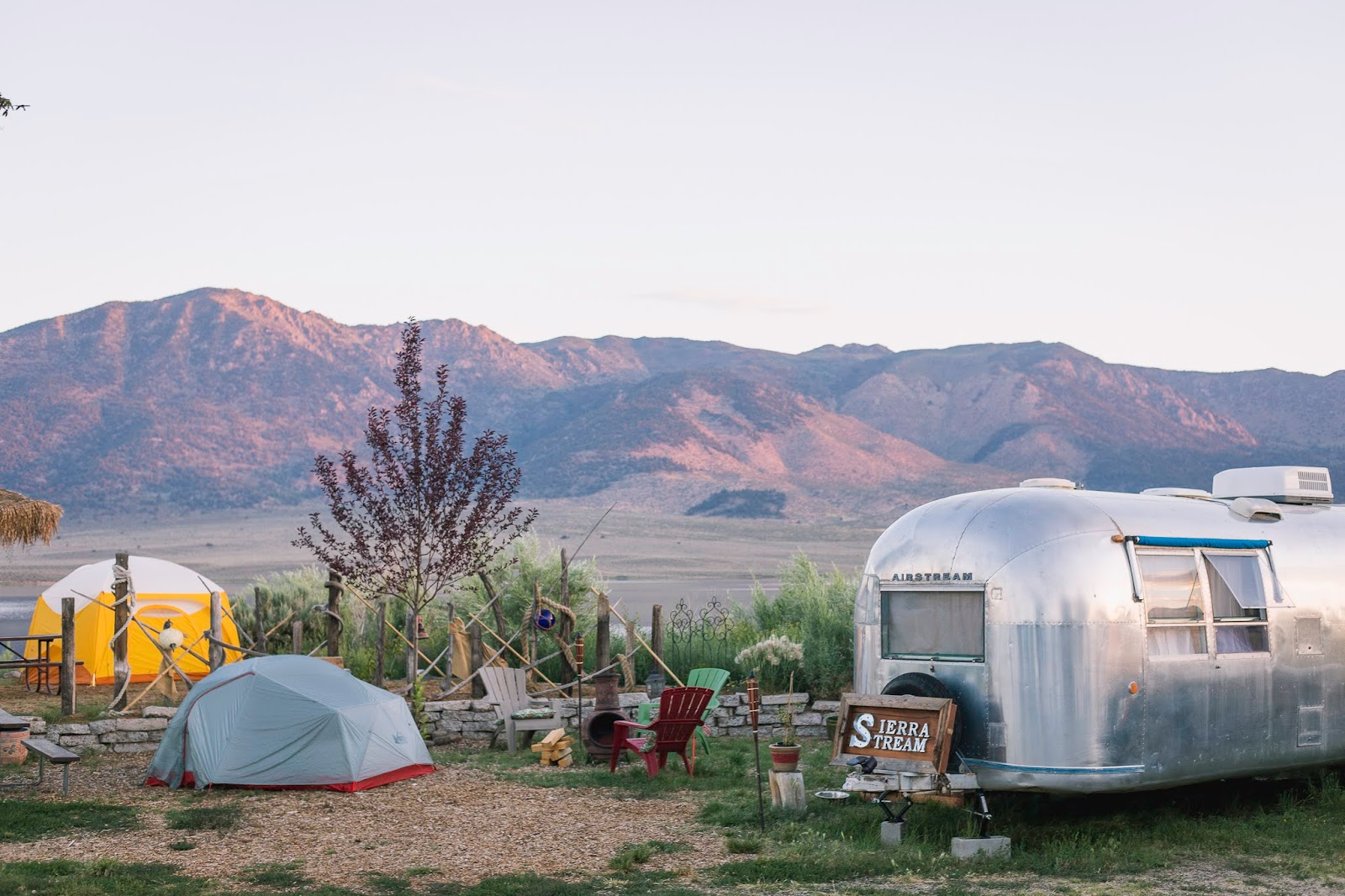
My “home” for the weekend
After getting home from a weekend of camping and hiking and having fun with friends, I have some honest words to share with you, with an appropriate resolution. As always, good skin care wins in the end!

Full disclosure: During the entire camping weekend I did not do my usual facial routinenot even close! I got to the campground from an event after midnight and climbed into my tent. Did I wash my face—no! Did I wash my face the next morning before going on a hikeno! I forgive myself these things knowing I would take care of my skin when I got home, which I did.

Once I returned home, I got everything out of my car, into my condo, and either into the washing machine or refrigerator or trash or recycling bin and finally took a heavenly bath! I had fallenslid, reallyinto deep mud on a hike earlier in the day and just needed a good soak in the tub after a long weekend of hikes and camping. Once all my things were taken care of, it was time for me

First, I gommaged my face, then got into the nice warm tub and proceeded to do my favorite thing after a camping trip: I used exfoliating gloves with my favorite peppermint liquid soap, and I scrub-a-dub-dubbed my body back to normal!

I gommaged because it gets rid of lots of surface dead skin and grabs onto dirt and debris nestled in the pores (it’s a gel), which was definitely needed after camping and not cleansing. The exfoliation gloves are great to exfoliate all the dirt and grime and sunscreen off the old bod after not being near a shower for a few days. Simply put, I was just helping to get my skin back in shape after a few days of neglect.

After getting my photos on the computer and posting a few on my FaceBook page, I relaxed with a beautiful glass of wine, put everything away from the trip that was ready to be put away, folded camping laundry, caught up on emails, then finally and happily went to sleep in my own bed. Good night!

The moral of this story is: If you can’t (or just don’t) do your normal facial routine due to circumstances beyond your control, be sure to make up for it and give yourself a thorough cleansing (and hopefully a good exfoliation) once you have the chance. All, then, will be forgiven!

For more information, see:
Mount of the Holy Cross seen from the Shrine Ridge trail